




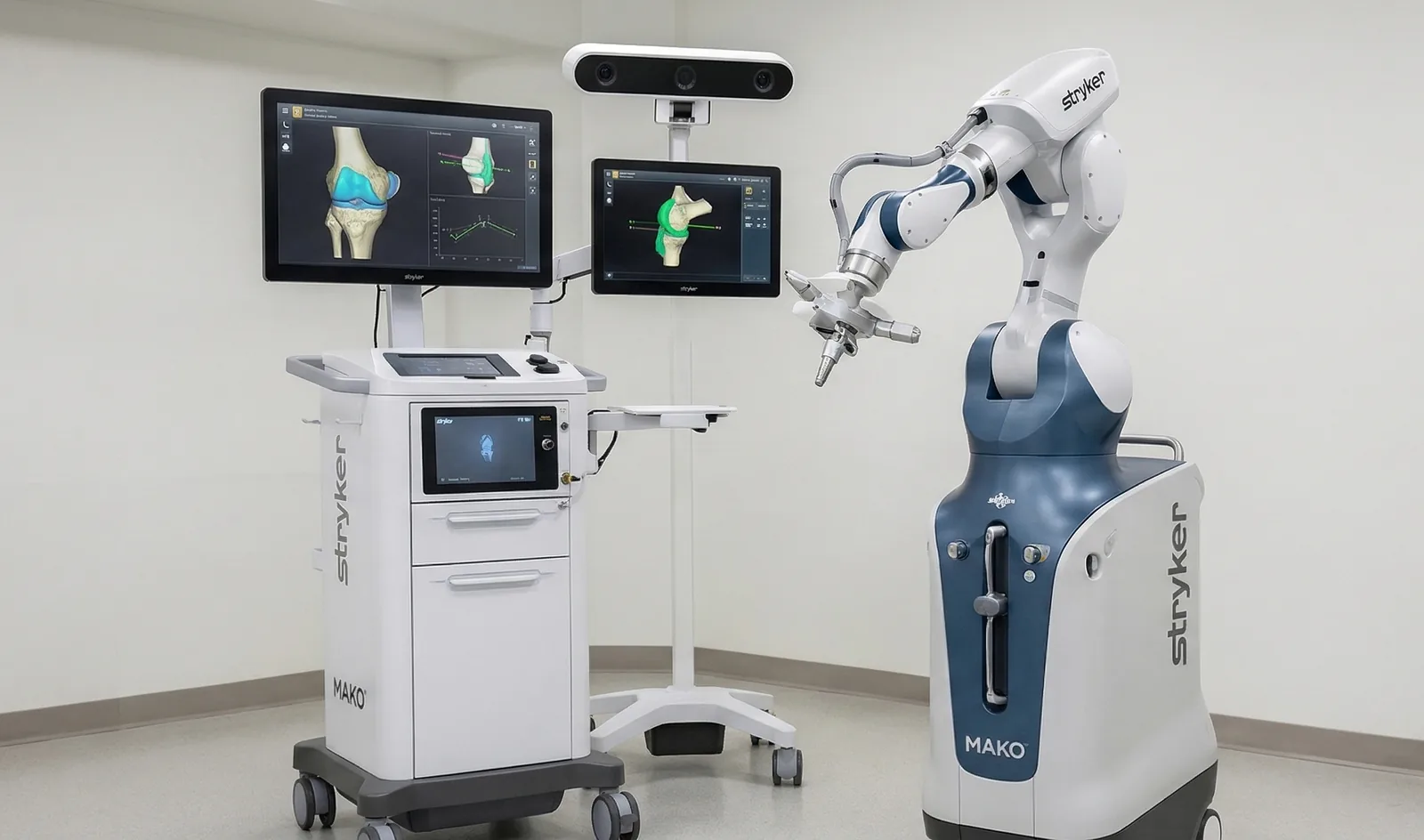
How Robotic-Arm Assisted Knee Replacement Works — A Surgeon's Guide
A plain-language explanation of robotic-arm assisted knee replacement technology, its benefits, and what recovery looks like.
Introduction
Robotic-arm assisted knee replacement is a modern surgical technique that helps improve the accuracy and success of knee surgeries. This advanced method uses robotic technology to assist surgeons in performing total knee replacements with greater precision, which can lead to better results for patients. This guide explains how robotic-arm assisted total knee replacement works, its benefits, and what patients can expect during the procedure, along with recovery timelines and information about Dr. Barton Harris and his services.
The Technology Behind Robotic Knee Replacement
Robotic knee replacement technology uses a robotic arm to help the surgeon perform the procedure with improved accuracy. Before surgery, a detailed plan is created using advanced imaging techniques, and during the operation, the robotic system provides real-time guidance to help ensure the implant is placed correctly in the knee joint. Compared to traditional methods, robotic-assisted surgery helps achieve better alignment and positioning of the implant, which is important for the knee replacement to last longer, while also reducing the chance of complications.
Benefits and Patient Outcomes
Robotic-arm assisted total knee replacement offers several benefits that help improve patient recovery and satisfaction, including improved recovery times, since the procedure is typically less invasive and causes less tissue damage; higher accuracy in implant placement, which helps the knee work better and last longer; a reduced hospital stay, since most patients can go home the same day or the next day; and immediate physical therapy, which usually begins right after surgery to help patients regain movement and strength quickly.
Recovery Timeline and Patient Care
The recovery process after robotic-arm assisted total knee replacement usually follows a general pattern: patients are monitored for a few hours after surgery and begin physical therapy the same day to encourage early movement; during the first week, most patients start walking with help and slowly increase their activity; and by four to six weeks, many patients return to normal activities, with ongoing improvement in strength and mobility. Following post-operative care instructions on physical therapy, pain management, and activity limits is important for a successful recovery.
About Dr. Barton Harris and OrthoVirginia
Dr. Barton Harris, MD, who works with OrthoVirginia, specializes in orthopedic surgery with a focus on robotic-arm assisted total knee replacement. With extensive experience in this field, Dr. Harris is committed to providing patients with attentive care and personalized treatment plans tailored to each patient's needs. At OrthoVirginia, patients receive thorough evaluations and access to the latest surgical options to effectively treat their knee pain.
How to Schedule an Appointment
Scheduling an appointment with Dr. Barton Harris is straightforward. Patients can contact the office to discuss their symptoms and explore treatment options, and during the first visit, Dr. Harris will assess the patient's condition and recommend the best treatment plan. It's helpful for patients to prepare any questions they have about the procedure, recovery, and expected results ahead of time.
Keep reading
Ready to Take the Next Step?
If you're considering joint replacement surgery, schedule a consultation to discuss your options and learn how outpatient surgery can get you back to your active lifestyle faster.